History and nature of Friouato
From the first rope descents to the 2026 reopening, and what the cave tells us about the Tazekka massif.
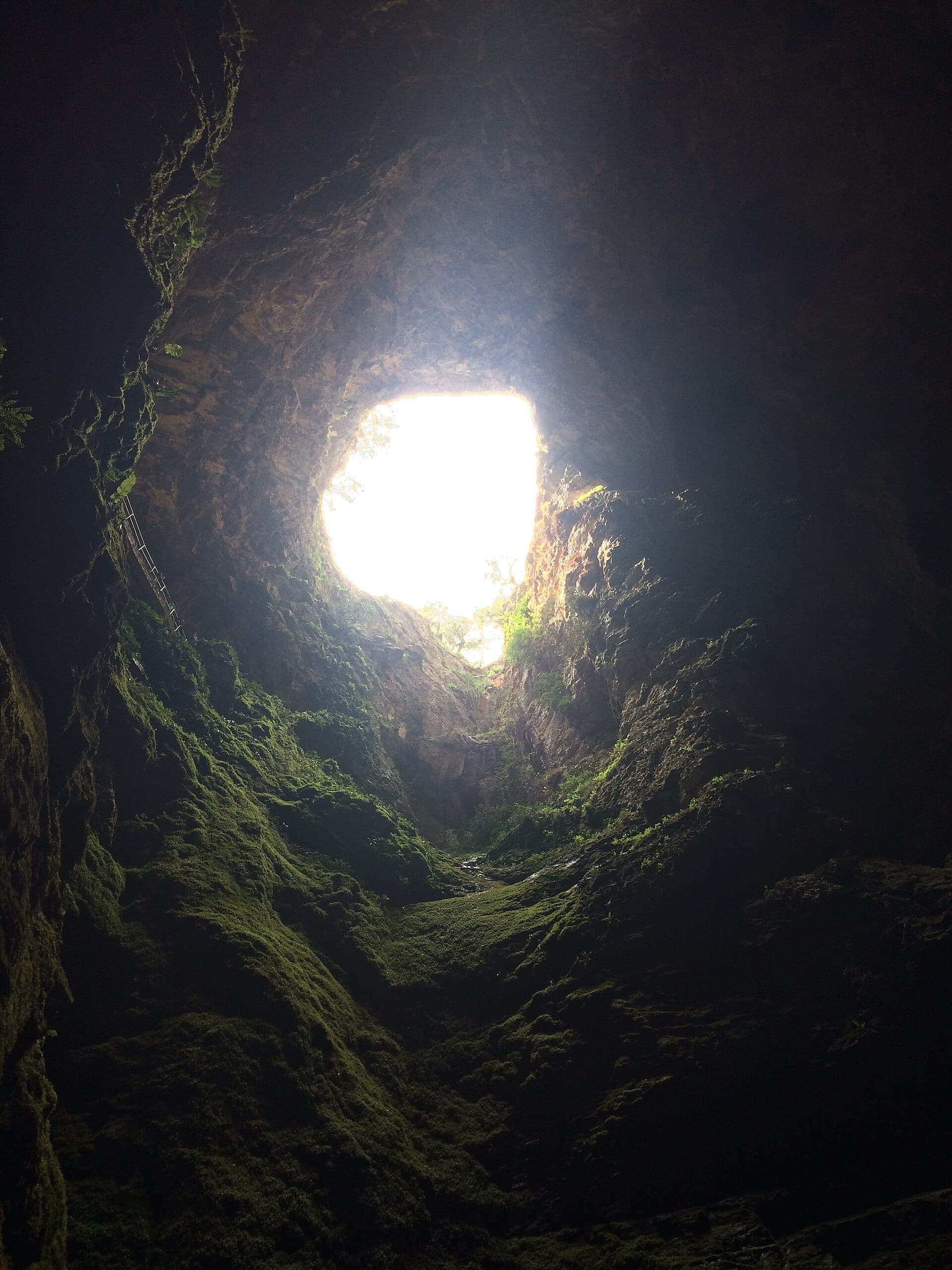
Key dates
- 1931
First rope descent into the sinkhole.
- 1934
Norbert and Élisabeth Casteret spend 45 days in the massif; Norbert reaches −125 m.
- 1948
The Taza Caving Club reaches the deep gallery, around −236 m.
- 1969
Cavers from the University of Exeter pass two sumps and reach −271 m.
- 2016
A rockfall claims a life; the site is closed to the public.
- 2023
Safety and restoration works begin.
- 2026
Reopening to the public at the end of July.
Geology
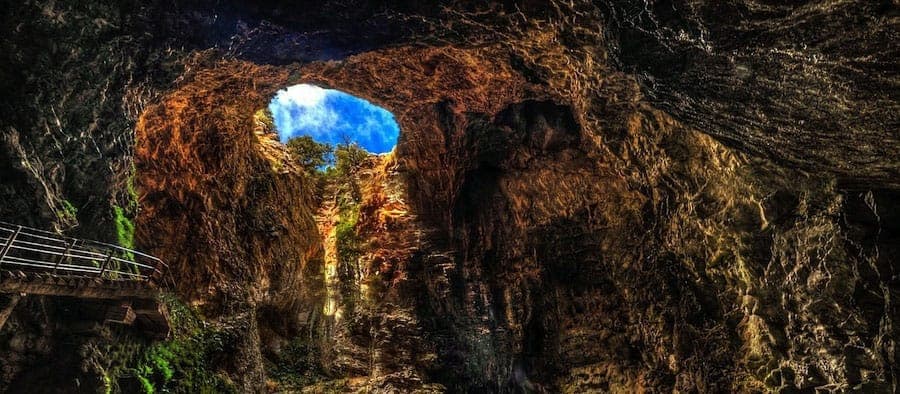
Friouato is a karst chasm: slightly acidic water dissolved the limestone of the Middle Atlas over thousands of years. Water from the nearby Daya Chiker seeps into it; it is thought to reach Chiker cave, about 1 km to the north-east.
Wildlife
The cave's pools host the breeding of the North African fire salamander, Salamandra algira splendens, observed by researchers at every stage of its life.
Sources
Survey of the cave published by Yabiladi (1980s); scientific publication on the breeding of Salamandra algira splendens in the cave; Hibapress, 28 July 2026; Tazekka National Park documentation.
The legend of Ito
Ito, a young shepherdess of Tazekka, fell gravely ill. Only wild honey could cure her. A young shepherd found it at the bottom of the chasm and saved her; they fell in love. Furious, Ito's father had the shepherd thrown into the abyss, and Ito followed him. They say the two crossed the cave by the light of beeswax candles, and that their tears remained in the rock.
Several versions are told in the region · the name “Friito” would mean “Ito's cave”
Your turn to go down
Plan your visit to the cave of the wind.